
Rosh Hashanah
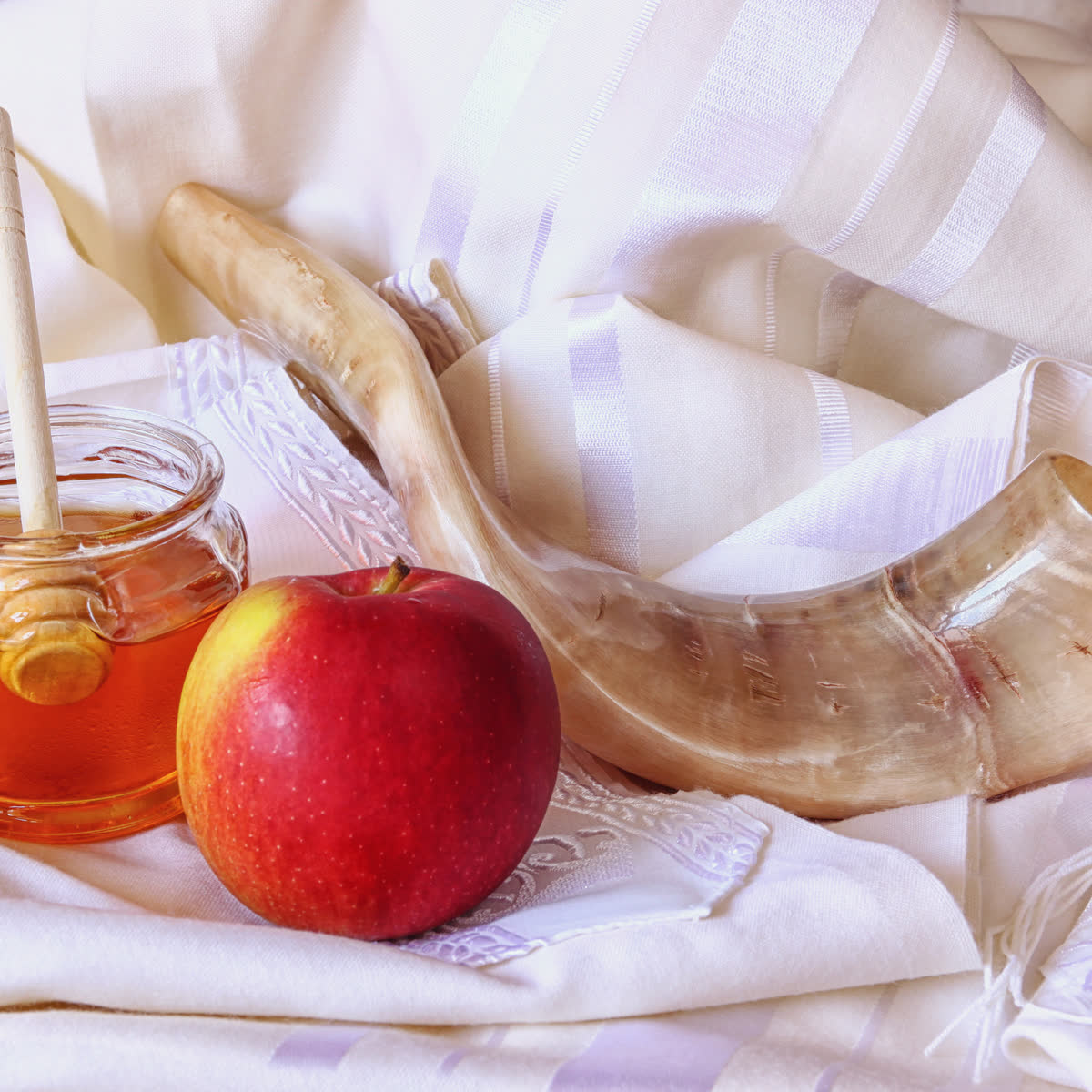
Rosh Hashanah means "head of the year". The first two days of the month of Tishrei open the new year of the Jewish calendar: September 12 and 13, 2026, 1 and 2 Tishrei 5787. Like every Jewish day, the holiday begins the evening before, at sunset on September 11.
A day of judgment and a day of mercy. Tradition says that man was created on this day, and so now everything created passes once again before the Creator. Rosh Hashanah is called Yom HaDin, the Day of Judgment. But this judgment is not a sentence: mercy always stands beside it, and ahead are the Ten Days of Repentance that end with Yom Kippur. That is why the holiday is not a sad one. It is welcomed in bright clothes, at a festive table, with the confidence that the year will be good.
The shofar. The main voice of these days is the shofar, a ram's horn. Its sound is not a melody or music: it is short and broken, like crying and calling at once. People say the shofar wakes not the ears but the heart: it reminds us that life goes on and that we can begin again. Next to the shofar we remember Abraham and the ram offered in place of Isaac, a story of faithfulness and mercy.
Simanim: signs on the table. The Rosh Hashanah table speaks in signs. An apple dipped in honey is a wish for a sweet year. A round challah is a year that stays whole, without breaks. A pomegranate, which tradition says has a great many seeds, is a wish for just as many good deeds. The head of a fish means "to be at the head and not at the tail". Different communities have their own signs: dates, beets, pumpkin, leeks, and a short wish is said over each of them. Children look forward to this part of the evening almost more than anything else.
Prayer and Tashlich. The prayers of these days are gathered in a separate book, the machzor. There are almost no requests for oneself in them; the main theme is the Creator's kingship over the world and the memory that no one is forgotten. On one of the days of the holiday it is customary to go out to water, a river, the sea, any living source, and say Tashlich: the words of the prophet Micah that sins will be cast into the depths of the sea. Pockets are shaken out over the water, a simple and very human gesture.
A woman in these days. On Rosh Hashanah a great deal rests on a woman: the home, the table, the candles, the family's mood. But behind the busy work there is something of her own: minutes when she can stop and say the most important things in her own words, without a book. A mother's prayer for her children on these days is considered especially strong. And the wish people exchange these days: "Leshanah tovah tikatevi v'techatemi", "May you be inscribed and sealed for a good year".